Rooted in Becoming: Motherhood, Art, and Southern Roots with Leequette Santiago

Updated: Jun 1
HRBN Life Stories sits in conversation with Oshawa, Ontario based artist Leequette Santiago, whose creative practice is deeply shaped by her Southern roots and the lineage of stories held within her family. Through her art, Leequette gives form to memory, translating moments of love and belonging into visual narratives that feel both intimate and familiar. Her work reflects not only her own lived experience, but the collective inheritance of family, reminding us that our stories are never singular. Our stories are carried, shared, and passed along.
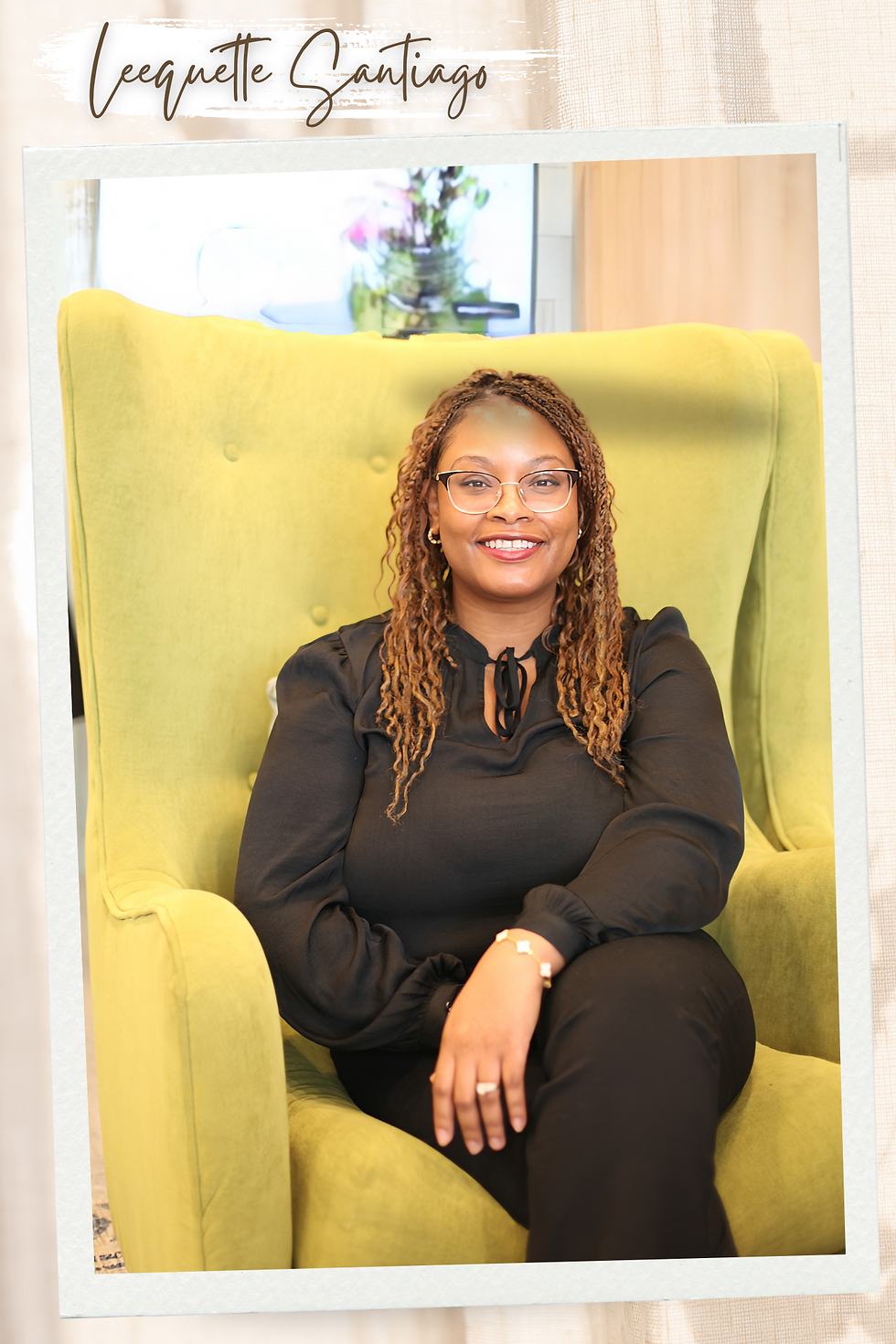
At the heart of Leequette’s artistry is a deep reverence for family. These bonds ground her, offering both refuge and encouragement as she moves through her creative practice. The love she receives from those closest to her gives her the freedom to explore her inner world honestly, working across mediums with a sense of trust in her own voice. It is this foundation that allows Leequette to navigate the vulnerability of being an artist, telling personal stories while gently inviting others to see themselves reflected within the work.
Through her art, memory and imagination meet. Southern roots and familial love are woven together, creating pieces that feel tender, intentional, and emotionally resonant. As Leequette continues to evolve, she remains anchored in the values that shape her work and her way of being – connection, care, and an unwavering commitment to telling stories that matter.
In this conversation, Leequette also reflects on the role of art as a bridge within community. She speaks openly about using her creative practice to hold space for difficult and necessary conversations, particularly around mental health within the Black community. By offering art as a place of expression and witnessing, Leequette creates room for dialogue, healing, and deeper understanding.

From the moment we sat down, Leequette spoke with a depth that set the tone for the entire conversation. Her reflections move fluidly between memory and meaning, revealing how her artistry has been shaped by family, lived experience, and a deep commitment to self-expression.
We began by tracing her journey back to the earliest moments where creativity first found its way into her life. I invite you to slow down, this conversation goes somewhere deep.
Eartha:
Can you take us back to the beginnings of your artistic journey and share what first called you toward visual expression?
Leequette:
From a very young age, art felt instinctive to me. At four years old, I was already creating what I thought were masterpieces, much to my mom’s surprise, on the walls of her living room. Instead of discouraging me, she recognized that spark and handed me a sketchbook. That sketchbook became my safe place. I could sit for hours drawing, completely lost in the process, letting my imagination move freely and without limits.
As I moved through school, doodling stayed with me. It was always there, a constant companion in everything I did. Then one day, a friend really noticed my drawings and encouraged me to take a step I hadn’t imagined for myself yet. She asked me to create a mural inspired by her daughters.
That experience changed everything. I spent countless evenings after work painting in her basement, completely immersed in the process. Those hours became a turning point, helping me refine my skills and realize how deeply committed I was to making art a central part of my life.
After that, I knew I wanted to keep going. I stayed committed to practicing my craft and eventually landed my first teaching role at Michael's. Teaching became a beautiful extension of my own learning. Guiding others through their creative process pushed me to grow, to stay curious, and to trust my instincts as an artist.
At the same time, I was studying Pediatric Health Administration, which added another layer to how I understand care, responsibility, and human connection. It’s hard to put into words, but that education shifted something in me. It gave me confidence—not just professionally, but creatively—helping me move through my artistic work with greater clarity and self-assurance.
"Aurelia Moment"
Not long after stepping into this new chapter in Pediatric Health Administration, I became a mother. I was still finding my footing when the COVID-19 pandemic arrived, and suddenly everything felt quieter and more distant than I was prepared for. Those early months of motherhood were deeply isolating. Being apart from family and loved ones made it hard to share both the joy and the uncertainty that come with becoming a new mom.
This emotional distance left me feeling disconnected, not only from family, but also from myself. I grappled with postpartum identity issues. I found myself questioning who I was beyond motherhood, and where the version of me I had known before fit into this new life. My focus shifted completely to caring for this tiny human, and everything I had done before felt insignificant in comparison to the magnitude of bringing a child into the world. This dual experience of isolation and identity loss prompted me to explore these themes through my art. I needed an outlet.
Eartha:
As you sat with questions of identity, motherhood, and self-worth, how did your relationship with art begin to change during that time?
Leequette:
Before becoming a mother, I didn’t fully know who I was. During my postpartum period, I turned to social media as an outlet, sharing portraits of celebrities I was creating as a way to feel a sense of momentum and achievement. Those pieces gained viral attention and even led to an invitation to visit California. But as the pandemic stretched on, that invitation was eventually rescinded. That moment forced me to slow down and really look at myself. I had to ask, what’s my story? Up until then, my identity as an artist had been closely tied to recognition and external milestones. Suddenly, that felt secondary to motherhood, and I began to question how I defined success and fulfillment altogether.
As I spent more time nurturing my child, something unexpected happened. New ideas began to surface, and my creativity deepened in ways I hadn’t anticipated. I realized that creating portraits of celebrities, particularly when I lack a genuine understanding of their true character, no longer resonated with me. I wanted my work to come from a more honest place.
My painting titled ‘Aurelia’ marked my first experience in a flow state... a moment where expression felt effortless and free.

Guided by the Love of Family
Much of my inspiration comes from my life at home with my growing family. As a mother to children with autism, I’ve learned to listen beyond words. Though they may not speak often, their ability to communicate is deeply expressive and unmistakable. Being attuned to them has reshaped how I understand connection, teaching me that body language, presence, and feeling often speak louder than language itself.
This journey has quietly transformed my paintings. What began as separate worlds—my formal art studies and the lessons learned through my children’s therapy sessions—have slowly woven themselves together. In that merging, my work has found new depth, guided less by technique alone and more by intuition, presence, and embodied understanding. Moreover, art has also become something shared within our home. My children paint beside me, which adds an element of joy to our time together. In those moments, creativity becomes conversation, and the canvas holds more than colour; it holds connection, closeness, and a language we speak together.
My husband has seen me through it all. What began as a pursuit of art became, just as much, a process of self-discovery. In moments marked by loneliness or questions of identity, he offered me a steady, safe place to lay those feelings down without judgment. He encouraged me to face those difficult feelings, rather than shy away from them. His presence has helped me find balance between motherhood and artistic expression, allowing both to grow alongside one another and deepen in meaning.
Eartha:
It’s clear that this season wasn’t about moving forward quickly, but about moving inward, allowing for identity, creativity, and purpose to be redefined from a more honest place. From that grounding, particularly after 'Aurelia,' what began to shift in your work, and how did that inner clarity begin to shape the opportunities and recognition that followed?
Leequette:
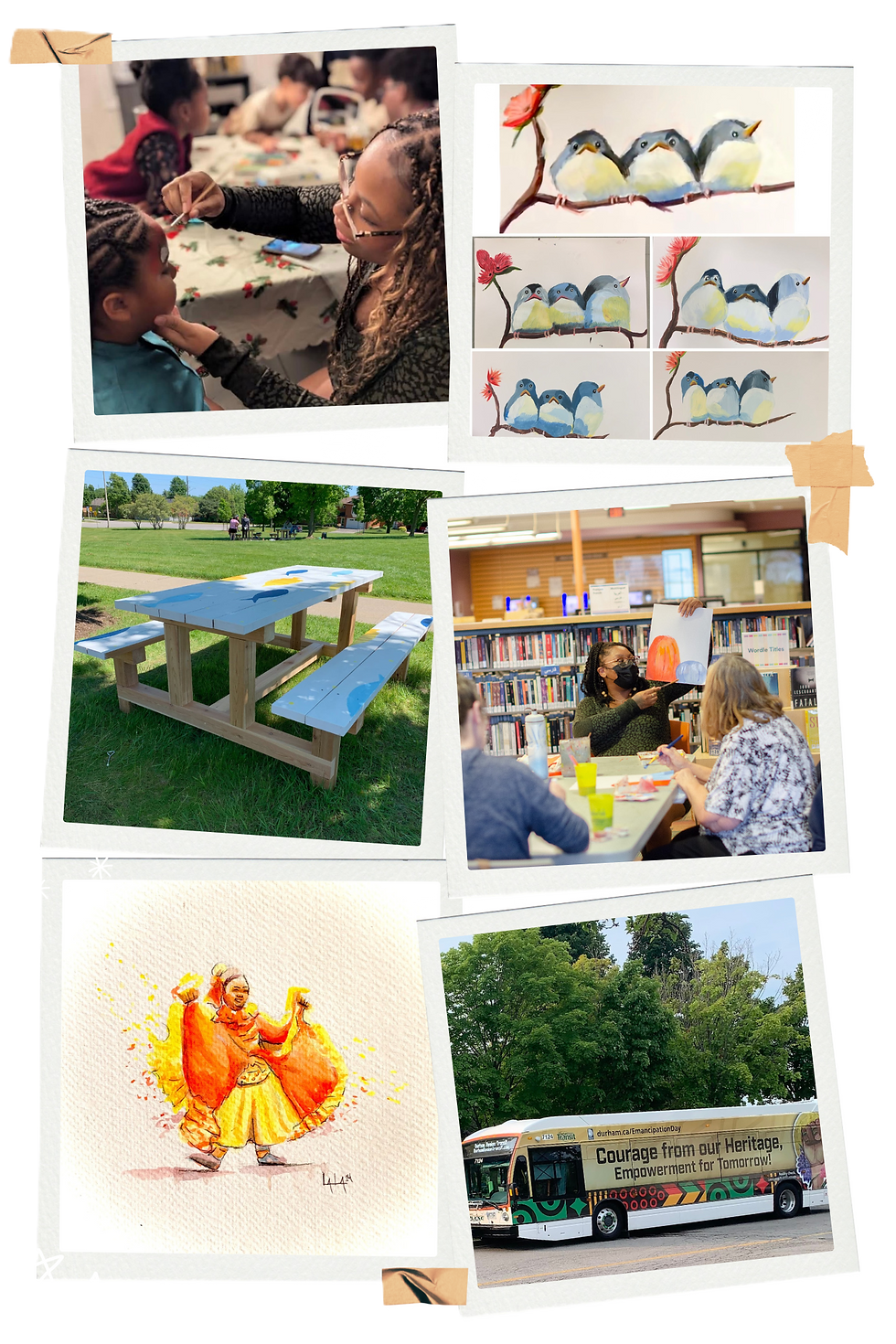
Over the course of a year, I immersed myself in steady practice and exploration, slowly uncovering a visual language that felt true to me. That period of growth led to my first public art commission in 2020, when I created a banner for Lakeview Oshawa.
A pivotal moment in my journey came in 2021, when I was honoured with the Oshawa Culture Counts Emerging Artist of the Year Award. That recognition shifted something for me — it opened doors to collaborations that once felt out of reach and affirmed that I was being seen in my work. Shortly after, I secured a teaching contract with the Oshawa Public Libraries. My visibility within the community grew even further when a series of birds I taught unexpectedly went viral, helping to deepen my presence and connection within the local art scene.
Motivated by my growing sense of confidence, I began a self-directed study into art history and the narratives of artists who inspired me. I started submitting my work to gallery calls, knowing rejection was part of the process, and meeting plenty of it along the way. Each “no” asked me to listen more closely, to strengthen how my work held story and meaning. Over time, I developed more structured and thoughtful processes, and my practice became more intentional, shaped by deeper reflection. That commitment was eventually met with recognition, including the Robert McLaughlin Gallery Award in both 2023 and 2024.
I’ve been grateful for opportunities to create public art in partnership with organizations such as the Regional Municipality of Durham and the City of Oshawa. I was also featured in a Pampers campaign as a mother of two, with another on the way, an experience that honoured not only my work as an artist, but also my lived reality as a parent navigating creativity, care, and professional life side by side.
Eartha:
As an artist with roots in the Southern United States, which region do you come from? And in what ways has your Southern heritage shaped your artistic vision and creative expression?
Leequette:
As an artist, my journey is deeply intertwined with the values I hold close.
I’m from Miami, Florida, with roots in Alabama, and the South lives vividly in my work. That influence is kept alive through ongoing conversations with family back home. We often reminisce about summers spent at my aunt’s house, and those moments are steeped in warmth, laughter, and nostalgia. Those memories stir something in me; when I feel them rise, I’m compelled to translate that emotion into my art.
I cherish my familial bonds. They ground me, offering both a sense of belonging and a steady source of support. The love and encouragement of my family continue to give me the courage to explore, create, and express myself authentically.
Eartha:
As I observe your artwork, two pieces stand out and instantly intrigue me: “Smells Like Outside” and “First Comes Rain.”
I observe “Smells Like Outside,” as not just a title, but an invitation to explore the intersection of memory, family heritage, and the sensory experiences that shape our understanding of nature. This piece of artwork evokes memories of my early years in Jamaica, where I spent countless days playing outdoors with my siblings and friends—often barefoot. I perceive the purity and spontaneity characteristic of childhood and this piece highlights for me, how we expressed our feelings through play, discovering happiness in simple pastimes. My childhood experience is truly invigorating to witness in your artwork.
“First Comes Rain” is a tapestry of deep emotions and symbolic meanings that captures an intimate moment between a mother and child. The emotional impact of the work stems from its depiction of maternal love, inviting me to reflect on my own experiences with motherhood, where self renewal and personal growth have been essential components of nurturing. As a mother, I engaged with my own feelings about family bonds while appreciating the nature of this artistic piece, and I’m reminded of an old African Proverb that says” Love like rain, does not choose the grass on which it falls.”
What specific experiences or events from your childhood, as well as your current role as a mother, have influenced your artistic vision?

Leequette:
“Smells Like Outside” is a direct phrase often spoken by my grandmother and other family members.
Growing up in the South, it was customary to be told to head straight for the shower after coming in from playing outside. It was a ritual shaped by an unspoken awareness of the odour that lingered on our skin after a long day under the sun. As a child, I never found those smells unpleasant. It wasn’t until a moment years later, at a park with my husband, that this idea came into clearer focus.
On a particularly warm afternoon, as my husband and I gathered our things to leave the park, a sharp, unfamiliar odour stopped me in my tracks. “What is that?” I blurted out. It didn’t take long to realize the scent was coming from the children who had been playing outside all day, including our own. In that instant, it dawned on me. My goodness. This was the very thing I had been shielded from as a child. The realization landed heavily, a true full-circle moment, connecting my past to the present.
The piece “Smells Like Outside” encapsulates not just the physical scent but also the emotional resonance tied to memories of carefree days spent outdoors; a reminder of how nature’s fragrances can evoke deep-seated feelings and reflections on growth and nostalgia.
I experienced an intense emotional response while attempting to capture an image that inspired my piece, “First Comes Rain.” The moment was intended to be lighthearted; I had positioned my sister with my camera to take a fun picture of me and my son. However, I encountered unexpected resistance from my son, who was clearly not in the mood for a photo session. Through his tears, I found myself pleading with him to “smile for the camera.”
We did not get the shot, but once the initial chaos subsided, it felt as though we were experiencing the calm after a storm. The atmosphere shifted completely; everything became peaceful and soothing, to the point where we nearly drifted off to sleep. In that serene moment, I sensed a deep connection with my son. It reminded me of the essence of maternal love, how our children can evoke such strong emotions within us and how our role is not to control or demand from them but rather to guide them as they find their way through the world.
This experience has shaped my work in meaningful ways and deepened my understanding of connection in parenting. It reminded me that creativity often grows from the quiet, honest moments we share with the people we love most.
Eartha:
Your work often explores spirituality and familial dynamics. Can you elaborate on how these themes manifest in your art?
Leequette:
Absolutely. Throughout my life, I’ve experienced moments that defy explanation – moments I know were guided by God. When I create, I’m intentional about ensuring my work aligns with my values and reflects what I stand for.
My artwork titled Uninvited is somewhat controversial. Once again, my family became unintentional subjects in the work. During a family gathering, my husband captured a series of candid photographs. When he later shared them with me, one image immediately caught my attention. “Wait… what’s that one?” I asked. After he sent it to me, I felt compelled to rework it, to shift and reshape it until it aligned with how the moment felt to me. That image became the foundation for "Uninvited."
Through "Uninvited," I explore themes of spirituality, my complicated relationship with what I often call “churchy folks,” and experiences of exclusion I’ve encountered within church spaces. While I value the sense of inspiration and community that church can offer, I believe it’s just as important to step back and nurture a personal relationship with God. For me, faith isn’t meant to be shaped solely by rigid rules or institutional expectations. I believe we can call on God in any moment, lay our burdens down, and trust that God is present with us, always.

“Ace High” is a heartfelt tribute to my late stepfather. This piece captures the spirit of our family’s game nights and the love that we shared with him.
My family gatherings are lively; we often have game nights that can get quite chaotic. At times, there can be around 13 people in my apartment, all shouting things like “He CHEATED!” I get to capture genuine moments of authenticity among my loved ones in this chaotic but lively atmosphere.
Eartha:
What traditional mediums and textiles do you prefer to work with most often, and why do they resonate with you?
Leequette:
I’m drawn to working with thread, beads, fabric, and acrylics. In high school, I enrolled in a fashion class, and my first design was a purse, one I was so proud of. It featured my own hand-stitched details and was even reversible. That project marked the moment I realized how deeply I enjoyed sewing. From there, as I moved through more projects, things began to unravel, both literally and figuratively, revealing layers of learning, patience, and self-discovery along the way.
My full sewing kit has always been a source of inspiration. Each time I open it, it brings back childhood memories of opening a cookie tin in my family home—expecting cookies only to find it filled with threads and pins instead.
More recently, I’ve expanded my practice by incorporating beads into my work, after learning about their significance within African art traditions. This addition has not only enriched my designs visually, but has also deepened my respect for the cultural narratives and ancestral stories carried within the materials themselves.
I was drawn to patterned fabric while trying to recreate similar motifs with paint in Ace High. It felt almost like a gravitational pull, the vibrancy, the rhythm, the texture calling me in. My mother has always had the most beautiful patterned sheets, and there’s something deeply familiar in them. That sense of recognition stays with me. Patterned fabrics, for me, feel like home.
Acrylics align naturally with my artistic identity. They’re also a practical choice for this season of my life. I have toddlers who run wild, which makes oils less suitable right now. I’m also intentional about avoiding cadmium and cobalt pigments, prioritizing safety for myself and my family while still honouring my creative practice.
Working across these mediums allows me to explore themes of traditional femininity. While I acknowledge the roles women have historically been expected to inhabit, there’s an irony in stitching thread into my artwork while the threads of my own couch remain frayed and ignored. That tension, between care, expectation and reality, finds its way into the work.
Eartha:
What guides your approach to bringing different materials together in your work?
Leequette:
My approach involves thoughtful planning, a deep consideration of how materials interact, and a commitment to delicacy in execution. I’m always aiming for a sense of harmony when bringing different elements together.
Because fabric is still relatively new to my practice, planning plays an especially important role in my process. Through experimentation, I’ve learned that fabric naturally pairs with thread, but I’m particularly drawn to exploring its relationship with acrylics and beads. This ongoing exploration helps me better understand the character of each material and how they can work in conversation with one another, resulting in pieces that feel both cohesive and visually striking.
Eartha:
Can you share any collaborative projects or initiatives you’ve been involved in that focus on uplifting and supporting community?
Leequette:
One of the most meaningful collaborations I’ve been part of was with the Congress of Black Women Canada for their event Black Girls Empowered. As part of this initiative, I facilitated a workshop titled Curls and Canvases, which created space for open conversations about our hair journeys and the deep cultural significance of hair within the Black community.
During the session, we shared open and meaningful conversations around experiences like postpartum hair loss. Many participants spoke about witnessing similar challenges in their mothers after childbirth, which created a powerful sense of recognition and connection. Through these shared stories, the space became one of care and mutual uplift.
The day unfolded with a collective sense of motivation and encouragement, reinforcing just how vital community, support, and shared experience are to empowerment.

In addition to my work with the Congress of Black Women Canada, I’ve led artist talks focused on encouraging people to pursue their passions with courage. Most recently, I had the opportunity to speak at the Afiwi Centre, where I shared insight into my creative process and offered resources to help emerging artists navigate their own journeys. These conversations are not only about exchanging knowledge, but about building community and affirming that there is no single path to becoming an artist.
Through these collaborative projects and initiatives, I’ve witnessed firsthand the power of community engagement to uplift, connect, and inspire creativity. Contributing to spaces where people feel empowered to express themselves and recognize their shared experiences is deeply meaningful to me.
Eartha:
How do you see art playing a role in building and strengthening community connections?
Leequette:
Art plays a vital role in culstivating community connections, especially when it comes to addressing sensitive issues like mental health stigma within the Black community. Too often, this stigma discourages people from seeking support, leading to isolation and deeper struggles. Through art, we can create safer spaces for expression, dialogue, and understanding. Spaces where stories can be shared, emotions can be acknowledged, and healing can begin.
Before I learned of my children’s diagnosis of Autism, I was navigating postpartum challenges. During this time, I received unhelpful advice that lacked empathy and understanding, suggesting that I simply needed to make my children “act right,” but I knew there was something more behind their behaviour.
This experience highlighted the need for deeper conversations about mental health rather than superficial solutions. It became evident that prioritizing my own mental health was essential not only for my well-being but also for recognizing the needs of my children. Being the “strong black woman” had taken a toll mentally and that manifests physically.
I am fortunate to have a great husband and family, but I recognize that many individuals do not have access to that kind of network. That awareness has deepened my desire to use art as a way to normalize conversations around mental health. I want to share my experiences with the hope of creating a space for others to share theirs—so that together, we can build something real and rooted in understanding.
When individuals see their own experiences reflected in artistic expressions, whether visual art music, or writing, it validates their feelings and encourages them to seek help without fear of judgment. Art gives us language when words alone fall short, and it reminds us that we are not alone in what we carry.
Eartha:
How do you measure growth in your artistic practice? Are there specific milestones that stand out to you?
Leequette:
Awards are impressive, collaborations are extraordinary, but I cannot tie these achievements to my personal worth. To do so would be to chase accolades or partnerships for their own sake. Although they certainly enhance my credentials, my true measure of success lies in the positive impact I can have on others’ lives. When my work resonates with people, that is where I find genuine success.
A recent milestone that deeply moved me was being contacted by a group of eighth-grade students who wanted me to participate in their Black Business Project. I was genuinely taken aback, honoured, emotional, and brought to tears. Knowing that young people were paying attention, not just to my business but to my work, affirmed something that’s been stirring within me.
That moment motivated me to invest further in my education and to explore ways of building financial stability while remaining in service to others. Most recently, I graduated from the Ogotawa Black Entrepreneur Program, which offered valuable insights into how I can grow sustainably and intentionally.
When those students first reached out, my hope was simple: that they truly saw my work, and not just what I sell, but what I create. Translating my ideas into tangible forms now carries deep meaning, especially knowing they can inspire the next generation.
Eartha:
It’s hard to believe that it has been almost exactly five years since we first met when I commissioned you to create artwork for my poem “Soulflower.” Art brought us together initially, but our bond also flourished through conversations sparked by my culinary creations. I take great pride in witnessing your artistic evolution and the strides you’ve made over the years! It is a privilege to share your story, and I eagerly anticipate celebrating all the achievements that await you in the future!
As you look ahead, what are your aspirations for the direction your art will take in the coming years?
Leequette:
I see myself continuing to explore new mediums while deepening my relationship with the ones I already use. I imagine a future filled with exhibitions that do more than showcase my work—shows that invite people in, spark conversation, and nurture a sense of community.
On the business side, I envision an elevation in my financial growth as I continue to build my brand and expand my reach through Santiago Studios. That growth will allow me to reinvest more intentionally into my art practice, creating space for experimentation, risk-taking, and innovation. I plan to keep exploring multiple avenues for sustainability, including online sales, workshops, and meaningful collaborations.
I also anticipate my offerings becoming more dynamic and playful through experiences that are a little unexpected, a little bold, and a lot of fun. Whether through immersive workshops or interactive installations, I want to invite people into the creative process itself. By expanding how people engage with my work, I hope to reach wider audiences and inspire others to connect with art in new, joyful ways.
Eartha:
What advice would you give to young artists who are trying to find their voice in the art world?
Leequette:
Persistence is essential in the art world. One of the most valuable pieces of advice I can offer young artists is to stay curious and keep experimenting, with styles, mediums, and techniques. Build a consistent creative practice that gives you room to discover what truly resonates with you and what best communicates your ideas. Don’t be afraid to step beyond your comfort zone; some of the most powerful and surprising breakthroughs happen when you allow yourself to try something new.
There will be challenges, rejections, and moments of self-doubt, but staying committed to your artistic journey is essential. Many artists we now celebrate faced countless setbacks before their work was recognized. Try to see failure not as a roadblock, but as a teacher. Each misstep offering clarity and growth that shapes both your practice and your voice.
I would also like to add that education plays an important role in artistic growth. Consider taking classes or workshops that can provide you with valuable insights into art theory, technique, and history. Online courses can be particularly beneficial as they allow flexibility while offering structured learning experiences. With this in mind, I created an online course, Acrylics Unlocked, designed for beginner artists. The course focuses on foundational structures that translate across various art forms, giving artists tools they can return to again and again as their practice evolves.
With time and reflection, each piece becomes a marker of growth, revealing what matters to you and how you see the world. Every work adds clarity, shaping a style and perspective that is uniquely your own.
Eartha:
How important is it for you as an artist to stay connected with your cultural roots while exploring new creative avenues?
Leequette:
As an artist, staying connected to my cultural roots is deeply important to me. Being grounded in my heritage helps me preserve my sense of self as I explore new creative paths, ensuring I don’t lose who I am in the process. While I value experimentation and creative freedom, I’m mindful that each artist’s expression is shaped by their background and lived experiences. That grounding is where authenticity lives.

As I continue to create, I find myself returning again and again to my heritage and my experiences growing up in the South. These influences are woven throughout my work, forming common threads that enrich my artistic expression and deepen my understanding of family, memory, and connection.
To learn more about Leequette “Lala” Santiago and her work at Santiago Studios, HRBN Life Stories invites you to explore her services, online shop, and upcoming workshops, including Acrylics Unlocked, at lalasantiago.com.
Continue the Conversation
Inspired by Leequette's Story? Through her work, Leequette reminds us that art doesn’t always need to explain itself to be impactful. Sometimes, simply being seen, felt, or shared is enough to begin healing, both individually and collectively.
Editorial Note
Leequette's responses have been lightly edited for clarity and flow while preserving her voice and meaning.
Written by Eartha Lowe
Eartha Lowe is a writer and founder of Her Roots By Nature (HRBN), a storytelling platform dedicated to capturing community-rooted narratives through reflective interviews and cultural storytelling.
Based in Ontario, Canada.
Website: herrootsbynature.ca


